Kunzite
Real vs Fake Kunzite
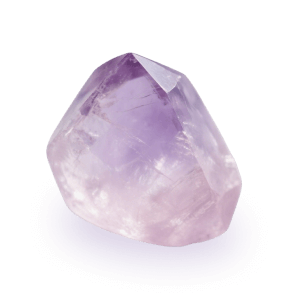
Kunzite is a pink to lilac variety of spodumene, valued for its gentle color and strong pleochroism—appearing different colors from different angles. Large kunzite crystals are common, but their softness and susceptibility to fading make them delicate in jewelry. Many fake kunzites exist, especially in larger sizes, often made of glass or colored quartz.
Color
Real
Pale to medium pink, violet, or lilac. Color can appear uneven or zoning may be visible.
Fake
Often overly vivid or perfectly uniform. Some show unnatural tones like neon pink or purplish-red.
Pleochroism
Real
Shows distinct color change when viewed from different angles—typically pink, colorless, and violet directions.
Fake
No visible color change. Color remains constant from all directions.
Transparency and Clarity
Real
Transparent with occasional parallel growth lines or feather-like inclusions.
Fake
Glass may be perfectly clear or show bubbles. Colored quartz may have cloudy zones or no internal features.
Luster
Real
Vitreous luster that appears soft and slightly silky on large surfaces.
Fake
Glass may look overly glossy or oily. Resin-based fakes appear dull or uneven.
Inclusions
Real
May show parallel striations, flat liquid films, or tiny platelets. These align with the crystal structure.
Fake
Glass fakes often contain round air bubbles or swirls. Quartz has different inclusion types and no striations.
Hardness
Real
Mohs 6.5–7. Scratches glass but can be scratched by harder gems.
Fake
Glass is softer (~5–5.5) and may show edge wear. Plastic is even softer.
UV Light Response
Real
Often fluoresces pink or orange under UV light.
Fake
Glass may not fluoresce or glows in unnatural colors.
Conclusion
Natural kunzite is easily recognized by its pleochroism, gentle pink-lilac hues, and internal crystal patterns. Fakes typically lack directional color change and show overly clear or vivid color. Visual inspection and magnification are effective tools for telling the difference.