Amethyst
Real vs Fake Amethyst
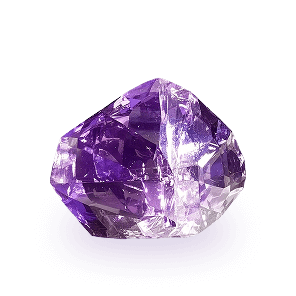
Amethyst is a popular purple variety of quartz prized for its beauty and affordability. It's widely used in jewelry, carvings, and decorative objects. Because of its popularity and accessible price point, amethyst is often imitated by synthetic materials or manipulated stones.
Color Consistency
Real
Natural amethyst usually displays uneven or zoned coloration. You may notice areas of varying purple intensity or even colorless streaks. The hue ranges from pale lavender to deep violet, often with a gradient.
Fake
Many synthetic or glass fakes have overly uniform or unnatural-looking colors. The purple may appear too vivid or too even, lacking the subtle variations of a natural stone.
Clarity and Inclusions
Real
Natural stones often contain minor inclusions—internal fractures, gas bubbles, or growth lines. These are usually visible under 10x magnification and are not necessarily flaws but signs of natural formation.
Fake
Synthetic quartz is often inclusion-free. Glass imitations may have round air bubbles or swirls not found in real quartz. These features can usually be spotted with a jeweler's loupe.
Hardness and Durability
Real
Amethyst is quartz, which ranks 7 on the Mohs hardness scale. It can scratch glass and resists abrasion relatively well.
Fake
Glass fakes are softer (about 5.5 on the Mohs scale) and may show surface scratches more readily. Dyed stones like quartzite may have inconsistent hardness.
Weight and Temperature
Real
As a crystalline mineral, amethyst feels cool to the touch and has a moderate weight.
Fake
Glass tends to feel warmer and may be heavier or lighter depending on the formulation. Plastic or resin fakes are noticeably lighter and warmer to touch.
Price and Source
Real
Genuine stones are inexpensive but still have value, especially if well-cut and richly colored. Stones labeled as amethyst and priced extremely low (especially in bulk) should raise suspicion.
Fake
Fakes may be sold as amethyst without disclosure or used in cheap costume jewelry. Extremely bright or neon-purple stones at very low prices are often synthetic or dyed.
Reaction to UV Light
Real
Generally shows no fluorescence under UV light or weak whitish glow.
Fake
Some glass or synthetic stones may fluoresce brightly, especially if doped with certain chemicals.
Conclusion
Authentic amethyst offers a combination of natural beauty, durability, and affordability. However, due to widespread imitation using glass, synthetics, and dyed stones, buyers should be cautious. When in doubt, consult a gemologist or request certification from a reputable lab. A combination of visual inspection and basic tests can often distinguish real amethyst from its imitators.